

Fabric GSM is one of the first specifications buyers review when sourcing bedding fabrics, but the number is only useful when read alongside construction, finishing, performance, and cost. In production, I often see fabrics with the same GSM deliver different hand, drape, or wash results because the fiber, yarn, weave, and finishing are different. Small weight changes can also matter across a bulk order, affecting material consumption, finished-product weight, FOB cost, and freight.
That is why I treat GSM as part of the complete fabric specification, not as a stand-alone quality rating. This article explains what GSM measures, how it works with thread count and construction, how fabric weight affects performance and landed cost, and how to carry a target finished GSM from RFQ and sample approval into bulk production.
Understanding GSM in Bedding Fabric Specifications
In a bedding fabric specification, GSM means grams per square meter—the weight of one square meter of fabric. A 120 GSM fabric, for example, weighs about 120 grams per square meter.

GSM gives buyers a practical way to compare fabric weight and material usage across similar constructions. It can also help estimate finished-product weight and the cost impact of a weight change. What it does not do is grade the fabric. A higher GSM does not automatically mean better softness, durability, or overall quality.
What Fabric GSM Measures
When fiber content, construction, and finishing are comparable, a higher GSM generally means more fabric mass per square meter and a more substantial fabric body.
On actual developments, I use GSM to check whether the fabric is tracking to the approved weight, but I would not approve a fabric on that number alone. The fabric specification and finished sample still matter because two fabrics at the same GSM can differ in hand, appearance, and performance.
| GSM Can Help Evaluate | GSM Alone Cannot Determine |
| Fabric weight | Fiber quality |
| Material usage | Softness and hand feel |
| Relative fabric body | Durability |
| Finished-product weight | Pilling or colorfastness |
| Potential cost impact | Shrinkage or dimensional stability |
Greige GSM vs. Finished GSM
Before suppliers quote or samples are approved, confirm whether the target refers to greige GSM or finished GSM. Greige fabric is measured before dyeing and finishing, while finished GSM is measured after the required processing.
Dyeing, washing, brushing, peaching, softening, and other finishing processes can affect fabric dimensions and measured GSM. For bulk orders, the quotation, approved sample, and production checks should use the same basis. If the requirement is 120 GSM finished, state that clearly in the specification.
GSM vs. Thread Count in Sheet Fabric Specifications
Buyers often see GSM and thread count listed together on a sheet fabric specification, but they measure different things. GSM describes fabric weight, while thread count describes the total number of warp and filling yarns within one square inch of woven fabric.
For buyers comparing GSM vs. thread count, the useful question is not which number is higher. GSM helps define weight and material usage, while thread count helps describe woven density and fabric cover. Yarn size and weave then help explain why fabrics with similar numbers can still feel different.
Cotton sheeting is a good example. Thread count, yarn count, fabric weight, weave, and finishing all need to be considered together rather than using one number as a quality shortcut.
How GSM, Thread Count, Yarn Count, and Weave Work Together
| Specification | What It Describes | Why Buyers Check It |
| GSM | Fabric weight per square meter | Material usage and product weight |
| Thread Count | Warp and filling yarns per square inch | Woven density and fabric cover |
| Yarn Count | Yarn size or linear density | Yarn fineness and fabric hand |
| Weave | How yarns interlace | Surface appearance and drape |

For woven cotton sheets, I normally review thread count together with yarn count, weave, and GSM. Two 300 thread count fabrics can still have different hand or drape because the yarn size, construction, or finishing is not the same.
For microfiber, brushed fabrics, flannel, jersey, and other weight-driven constructions, GSM is often the more direct starting point. Even then, yarn selection and finishing still affect the finished result.
Fabric GSM in Bedding Sourcing: Performance and Cost Considerations
Once the construction is defined, GSM becomes part of the commercial decision. It affects fabric body, finished-product weight, material usage, and whether the specification fits the target price point.
The key question is whether the fabric weight supports the product brief. A heavier construction may provide more body or coverage, but it also adds material consumption and unit weight. Across a bulk order, even a modest GSM change can affect FOB cost, packing weight, freight, and landed cost.
Fabric Hand, Drape, and Opacity
Within a comparable construction, higher GSM generally gives the fabric more body and a more substantial hand. It may also improve opacity or coverage, depending on the fiber, yarn, weave, and finishing.
During development, I review GSM together with the finished sample rather than judging the number alone. Two brushed microfiber fabrics may both finish at 120 GSM, yet one can feel softer and fuller while the other feels smoother and flatter because the yarn specification, brushing, or finishing is different.
The goal is to choose the weight that delivers the hand, appearance, and coverage required by the product brief without adding cost the product does not need.
Washing and Long-Term Performance
For bedding that will be laundered regularly, initial hand feel is only part of the evaluation. Buyers should also review shrinkage, dimensional stability, pilling, surface appearance, and repeated wash performance
A heavier fabric is not automatically more durable or more stable after washing. For hospitality, rental, and other high-turnover programs, I put more weight on wash testing and actual use conditions because repeatable performance directly affects replacement cost.
Fabric weight can also influence drying load, but construction, moisture retention, equipment, and drying conditions matter as well.
Material Cost, Unit Weight, and Landed Cost
With comparable fiber content and construction, higher GSM generally means more fabric mass per square meter. That can increase material consumption, finished-product weight, and target FOB cost.
The logistics impact depends on the finished pack. A heavier product may increase carton weight, while finished dimensions, packing method, and carton size affect case pack and container utilization. Freight and landed cost should therefore be reviewed against the actual packing configuration.
When I review a new program, I come back to one practical question: does the additional fabric weight create enough value? If it improves the hand, appearance, or performance the program requires, the added cost may make sense. If not, it is simply extra material and logistics cost.
Selecting Fabric GSM for Different Bedding Programs
There is no single GSM that fits every bedding program. The right weight depends on product positioning, sales channel, performance requirements, and target cost.
In development, I normally start with the product brief before confirming GSM. Retail, private-label, wholesale, and hospitality programs have different commercial priorities.
| Bedding Program | Main Focus | GSM Consideration |
| Retail & E-commerce | Feel, presentation, price point | Match GSM to product positioning |
| Private-Label & Branded | Consistency and differentiation | Keep GSM within the approved specification |
| Wholesale & Distribution | Unit economics and supply efficiency | Balance weight with cost and packing |
| Hospitality & Commercial | Wash performance and operating cost | Select GSM around service requirements |
For retail programs, the fabric should support the intended presentation and price point without adding unnecessary cost. For private-label programs, consistency becomes more important once the construction is approved because repeat orders need to reproduce the same product.
For wholesale and commercial programs, overall economics and repeatable performance usually matter more than simply choosing a heavier construction.
Fabric GSM Specification and Verification for Bulk Bedding Orders

By the RFQ stage, GSM should be part of a complete fabric specification, not a standalone number. A clear specification allows suppliers to quote comparable constructions, prepare relevant samples, and work from the same basis during bulk production.
From my experience with bedding developments, many GSM problems begin before testing. The buyer and supplier may be working from different assumptions about construction, finishing stage, tolerance, or measurement conditions. Defining these points before sampling makes supplier comparison much more reliable.
Define the Product Brief Before Setting GSM
I would not begin a bedding RFQ with “soft 120 GSM sheets.” It can open the discussion, but it is not enough for several suppliers to quote the same product.
Before setting GSM, confirm:
- Product type and set configuration
- Sales channel and target price point
- Order quantity and SKU requirements
- Intended use and performance expectations
- Reference fabric or approved sample, if available
The better sequence is product brief → fabric specification → target GSM. Fabric weight should support the product direction rather than drive every other decision.
Build a Complete Fabric Specification
A practical bedding specification should give suppliers enough information to quote the same construction.
Fabric construction
- Fiber composition
- Yarn specification
- Weave or knit construction
- Thread count or density where relevant
- Target finished GSM
- Finishing requirements
Performance requirements
- Shrinkage and dimensional stability
- Pilling performance
- Colorfastness
- Wash and drying conditions
“Soft 120 GSM bed sheets” still leaves too much open to interpretation. Different yarns, constructions, and finishing processes can reach the same GSM while producing different hand, appearance, and wash performance.
Compare Supplier Quotes on the Same Basis
When reviewing supplier offers, I do not look at FOB price first. I compare what is behind the price.
| Specification | Why It Matters |
| Fiber & Construction | Confirms the same fabric direction |
| Finished GSM | Keeps weight on the same basis |
| Finish & Performance | Identifies hand and wash differences |
| Finished Size & Sewing | Confirms the same final product |
| Packaging | Prevents hidden cost differences |
| MOQ & Lead Time | Confirms commercial feasibility |
A lower quotation may come from lighter fabric, different finishing, wider tolerances, or simpler packaging. The lowest FOB price is only meaningful when the specifications behind the quotations are comparable.
Approve the Sample and Set the GSM Acceptance Basis
GSM approval alone is not enough to release production. Buyers should review the finished product as a whole, including hand, color, surface appearance, dimensions, fit, sewing, and packaging.
A fabric swatch works for early screening, but an approved finished sample is a better production reference because it shows how the material and workmanship work together. Keep that sample with the written specification for bulk production and repeat orders.
Before cutting, confirm the target GSM, agreed tolerance, fabric condition, and measurement basis. In production, I prefer to identify a weight drift before cutting whenever possible. The goal is not simply to hit a GSM number on paper, but to reproduce the approved construction consistently in bulk and on repeat orders.
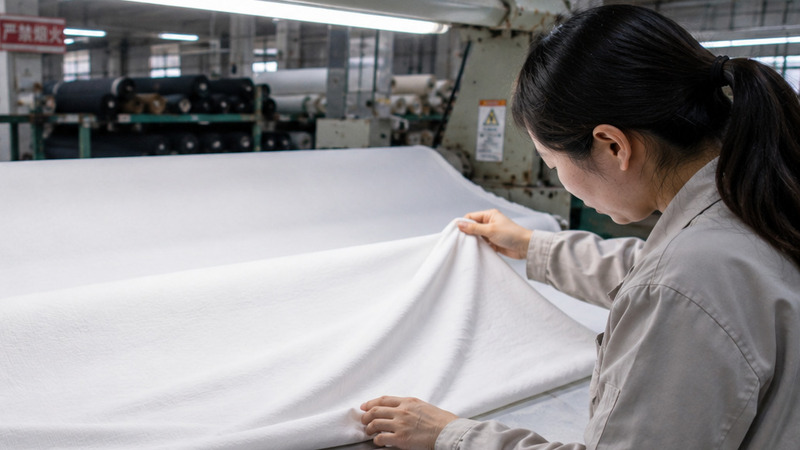
Fabric GSM for Bedding: Sourcing FAQ
Is 120 GSM Good for Bed Sheets?
Yes. A 120 GSM fabric can work for many sheet programs, including brushed microfiber and some cotton constructions. The right choice still depends on fiber, construction, finishing, target hand, and wash performance.
What GSM Range Is Common for Microfiber Sheets?
For commercial microfiber sheets, 90–120 GSM is a useful sourcing reference, not a universal standard. Buyers should also review finishing, opacity, pilling, and wash performance before approval.
What GSM Range Is Common for Cotton Sheets?
Cotton sheets should be evaluated by construction as well as weight. Percale and sateen use different constructions, so yarn count, thread count, weave, finishing, and shrinkage should be reviewed with GSM.
Does Higher GSM Mean Better Bed Sheets?
Not necessarily. Higher GSM means more fabric mass per square meter and may provide more body or coverage. It does not automatically improve softness, durability, or wash performance.
Can GSM Change After Finishing or Washing?
Yes. Dyeing, washing, brushing, and other finishing processes can change fabric dimensions and measured GSM. For bulk orders, specify whether the target is greige or finished GSM and keep the measurement basis consistent.
Next Steps for a Production-Ready Bedding Specification
Once the fabric direction is clear, turn it into a specification suppliers can quote accurately and reproduce in bulk. Make sure the product brief, fabric specification, and approval standard are aligned before requesting prices.
Review our [Bedding Products] before finalizing the program to compare suitable product categories and construction options. A clear specification helps keep quotations, sample approval, bulk production, and repeat orders aligned to the same reference.
Bedding Development Support from Dongyu Textile
Dongyu Textile has more than 15 years of experience producing comforter sets, fitted sheets, blankets, throw pillows, and seasonal bedding for B2B programs. We support fabric development, sampling, private-label programs, and bulk production from specification review through order execution.
If you already have a target GSM, tech pack, reference sample, or existing specification, send it with your inquiry. We can review the construction and finished-product requirements before quotation or sampling.