

If you are sourcing cotton bedding, the product name alone will not tell you how the finished bedding will perform. 100% cotton and washed cotton describe different parts of the specification, and treating them as interchangeable can make supplier quotes harder to compare and create avoidable problems during sample approval.
In development work, we have seen samples look right at first but change after washing because the construction, finish, or dimensional requirements were not defined clearly enough.
This article explains how to separate those variables, build a clearer bedding RFQ, review wash-tested samples, and compare supplier quotes on the same basis. The starting point is simple: understand the difference between fiber content and finish.
Fiber Content and Finishing in Bedding Specifications
The key distinction is simple: 100% cotton describes fiber content, while washed cotton describes a finishing treatment. The same bedding product can be both, so buyers should not treat them as competing material categories.
That distinction matters once a product name becomes a sourcing specification. Before comparing supplier quotes or approving samples, confirm the fabric construction, finish, finished dimensions, and wash-performance requirements the program needs.
100% Cotton Refers to Fiber Content
When sheets, pillowcases, or duvet covers are labeled 100% cotton, the term tells you what the fabric is made from. It does not tell you how the finished bedding will feel, drape, or perform after washing.
Yarn count, weave, thread count or fabric weight, and finishing all influence the final result. Two 100% cotton fabrics can therefore have noticeably different hand feel and appearance even when the fiber content is identical. CottonWorks likewise treats thread count as only one part of evaluating cotton sheets rather than a stand-alone measure of quality.
When I review a bedding RFQ, 100% cotton confirms the fiber, but I still need the construction details and performance targets before the factory can quote accurately. For U.S. programs, the fiber claim on the label should match the actual fiber content.
Washed Cotton Describes a Finishing Treatment
Washed cotton is not a separate fiber. It generally refers to cotton fabric that has been washed or otherwise finished to develop a softer hand and more relaxed appearance.
The important point for buyers is that “washed cotton” does not define one fixed result. Suppliers may use similar terms but deliver different hand feel, surface appearance, shrinkage, and dimensional stability after washing.
If hand feel matters, I prefer to approve against a reference sample and agree on the target appearance and wash performance before bulk production. For sourcing, the specification behind the name matters more than the name itself.
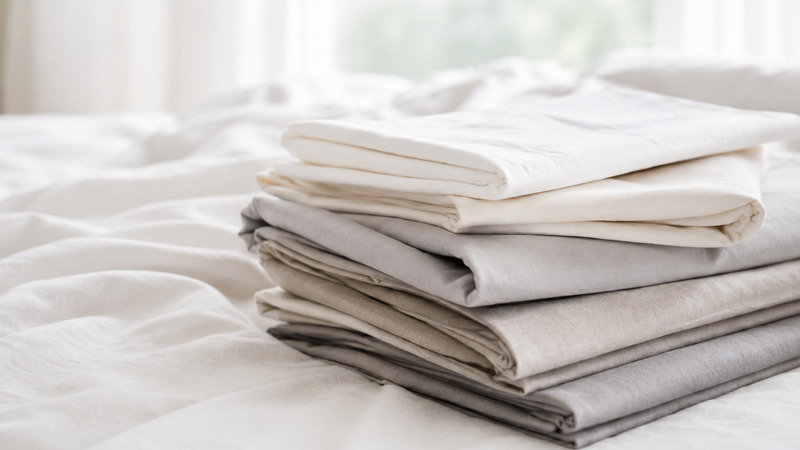
5 Factors to Evaluate Before Placing a Bulk Bedding Order
Once the terminology is clear, the buying decision shifts to how the finish affects the product in a real order. For a bulk bedding program, I focus on five areas: hand feel and appearance, dimensional stability, durability, laundry requirements, and cost.
| Buying Factor | Without a Washed Finish | With a Washed Finish | Buyer Focus |
| Hand feel & appearance | Depends on construction | Usually softer, more relaxed | Product positioning |
| Dimensional stability | Depends on construction and finish | Still requires wash testing | Fit and finished size |
| Surface & durability | Varies with construction and use | Review after repeated washing | Appearance and product life |
| Care requirements | Wrinkles may appear more noticeable | Minor wrinkles may be less noticeable | Laundry routine |
| Cost impact | Standard finishing cost | May add processing cost | Target FOB |
Hand Feel and Appearance
A washed finish is usually chosen when the program calls for a softer hand and a more relaxed look. That is a positioning decision, not a quality grade, because yarn, weave, construction, and finishing all influence the final hand and appearance.
For retail and e-commerce programs, drape and surface texture also matter. The finish should support the intended product look rather than add a feature the customer is unlikely to notice.
Shrinkage and Dimensional Stability
Shrinkage becomes a sourcing issue when it changes fit. A duvet cover can finish too short, a fitted sheet can become too tight, or pillowcases can fall outside the approved dimensions after washing.
In development work, we have seen samples look right before laundering and then shift after washing. That is why I prefer to confirm the finished product against the agreed dimensional tolerance rather than rely on a pre-washed claim alone.
Surface Appearance and Durability
Initial softness says little about how the bedding will hold up over time. Repeated washing can reveal pilling, fuzzing, color change, or surface changes that are not obvious on a new sample.
When I review a washed sample, I look at finished size, hand feel, seams, and surface appearance together. The product should stay close to the approved standard under the laundering conditions expected in actual use.
Care Requirements and Cost
A washed finish can add processing cost, so the added value needs to make sense for the end use. On value-focused orders, I look at target FOB, laundry needs, and what the customer can actually see or feel.
The finish should support the product position and wash routine at a cost the program can carry.
6 Bedding Specifications to Confirm Before Requesting a Quote
Once the finish and performance priorities are clear, the next step is to turn them into a specification suppliers can quote against. A useful bedding RFQ should give each factory enough information to price the same product. I usually check six areas before sampling starts: fiber content, construction, finish, finished size, wash performance, and labeling or packaging.
Fiber Content
State the actual fiber content, such as 100% cotton or the exact percentages of a blend. Keep fiber content and finish separate; “washed” describes processing, not what the fabric is made from.
For U.S. programs, the fiber claim on the label should match the actual product.
Fabric Construction
Fiber content alone is not enough for an accurate quote. Include the weave, yarn count, thread count or fabric weight, plus construction details that affect hand feel and performance. CottonWorks likewise treats thread count as one part of cotton-sheet evaluation rather than a stand-alone quality measure.
If you have an approved fabric or finished sample, send it with the RFQ. In practice, an approved reference sample often communicates the target more clearly than a long description.

Washing and Finishing Requirements
If the program calls for a washed finish, describe the result you expect rather than relying on the process name alone. Similar terms can still produce different hand feel and surface appearance, so I prefer to agree on the target hand and appearance during sampling and keep the approved sample as the reference.
Finished Size and Tolerance
Do not rely on size names such as Queen or King alone. Give the finished dimensions and acceptable tolerances, along with details that affect fit, such as fitted-sheet pocket depth and elastic construction or duvet-cover and pillowcase closures.
If size after washing matters, include the wash conditions and acceptable dimensional change.
Wash and Performance Requirements
Tell the supplier what needs to remain acceptable after washing. Depending on the program, that may include:
- Dimensional change
- Pilling or fuzzing
- Colorfastness
- Hand-feel change
- Seam condition and overall appearance
The targets should reflect the end use. Home bedding and products intended for frequent commercial laundering may need different performance criteria.
Labels, Packaging, and Certification
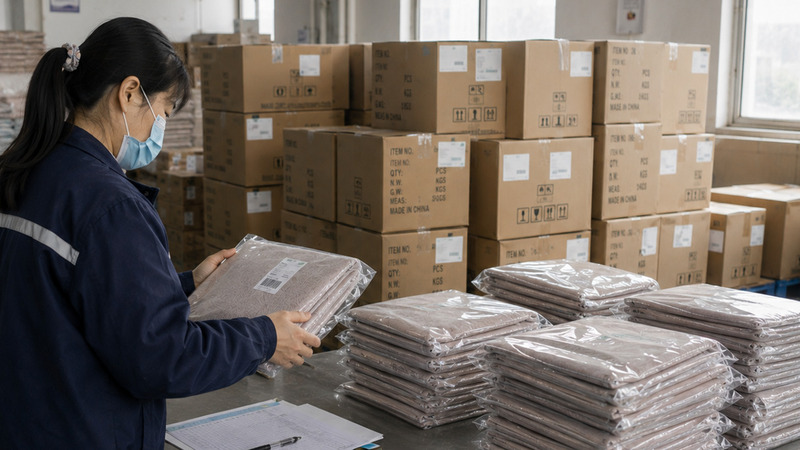
For private-label programs, bring labeling and packaging into the RFQ early. For U.S. programs, confirm fiber content, country of origin, and company identification, then add buyer-specific requirements such as brand labels, UPCs, retail packaging, and carton marks.
If OEKO-TEX STANDARD 100 or another certification is required, state it before materials are selected. STANDARD 100 applies to textiles tested for harmful substances, so it should be treated as a specific buyer or program requirement.
A bedding RFQ does not need to be long. It needs to be clear enough that every supplier is pricing the same specification. Once that specification is agreed, the next step is to confirm it on the finished, wash-tested sample.
How to Test Washed Cotton Bedding Before Bulk Production
Once the specification is agreed, the next step is to confirm that the finished sample actually meets it. Washed cotton bedding can look and feel right when new but change after washing, so I want to see how the finished product holds its size, hand feel, appearance, and workmanship before bulk production.
Approve the Finished Sample
A fabric swatch is useful for reviewing color, construction, and initial hand feel, but it cannot confirm fit or finished-product performance. Review the finished sample against the specification, including dimensions, seams, elastic or closures, and overall workmanship.
For fitted sheets, check fit and elastic recovery. For duvet covers and pillowcases, confirm finished dimensions and closure construction.
Compare Before and After Washing
Measure and photograph the sample before washing, and record the wash cycle and drying method. After washing, review:
- Dimensional change
- Pilling or fuzzing
- Color change
- Hand-feel change
- Seam condition
- Elastic or closure performance
In production, I find these records much more useful than comments such as “it feels different.” They give the buyer and factory a clear approval reference if bulk production begins to move away from the approved sample.
Match the Wash Test to the End Use
The test conditions should reflect how the bedding will actually be used. Home bedding and hospitality bedding can face different laundering routines, so the wash cycle, drying method, and acceptance criteria should match the program.
If the finished sample still meets the agreed standard after washing, you have a much stronger reference for bulk production.
How to Compare Supplier Quotes for Washed Cotton Bedding
Once the product specification is clear, supplier quotes are much easier to evaluate. When I review quotes, I first check what each factory is actually pricing. Similar product descriptions can still cover different construction, finishing, tolerances, packaging, or commercial terms.
Compare Quotes on the Same Basis
Before comparing FOB prices, make sure each quote follows the agreed specification and covers the same packaging, MOQ, lead time, and Incoterm.
If those points do not line up, the price comparison is not meaningful. I would clear up the differences before negotiating price rather than compare numbers based on different requirements.

Check Consistency in Bulk and Reorders
A good development sample only matters if the factory can reproduce it in production. With washed cotton programs, small changes in hand feel, shade, finished size, or after-wash appearance can become more noticeable from one production lot to the next.
That is why I keep the approved reference sample as the production benchmark. It gives the buyer and factory a practical standard for bulk production and future reorders.
Look Beyond FOB Price
FOB price matters, but rework, additional inspection, replacements, delays, and inconsistent reorders can quickly erase a small unit-price advantage.
For private-label bedding, the stronger quote is the one that combines the right specification, reliable consistency, and workable commercial terms at a competitive price.
FAQ About Washed Cotton vs. 100% Cotton
1.Can Washed Cotton Also Be 100% Cotton?
Yes. “100% cotton” describes the fiber content, while “washed” describes the finish. A product can be both, so buyers should confirm the actual fiber content in the specification and labeling.
2.Is Washed Cotton the Same as Pre-Shrunk Cotton?
Not necessarily. A washed finish may be used to develop hand feel and appearance, while pre-shrinking is intended to control dimensional change.I would not use washed, pre-washed, and pre-shrunk as interchangeable specifications.
3.Does a Washed Finish Make Cotton Bedding Softer?
Often, but not by itself. Yarn, weave, fabric construction, and finishing all affect the final hand, so two washed cotton fabrics can still feel different. If softness matters, approve against a finished reference sample rather than the product name alone.
4.Does Washed Cotton Shrink Less After Washing?
It may, but “washed” does not guarantee dimensional stability. The reliable way to judge shrinkage is to measure the actual dimensional change under the agreed wash conditions. AATCC TM135 is specifically used for dimensional change after home laundering.
5.Is Washed Cotton Suitable for Hospitality or Short-Term Rentals?
It can be, depending on the laundry routine and product positioning. For frequently washed bedding, I would give more weight to dimensional stability, durability, after-wash appearance, and cost per use than to initial softness alone.
From Specification to Bulk Production
For bedding buyers, the practical takeaway is simple: do not make a sourcing decision based on the terms washed cotton or 100% cotton alone. What matters is whether the specification clearly defines what the supplier is expected to produce consistently in bulk.
Before moving forward, make sure three points are aligned:
- Fiber content, construction, and target finish
- Finished dimensions and wash-performance requirements
- An approved, wash-tested sample that will serve as the production reference
When these points are clear, supplier quotes are easier to compare, sample approval is more objective, and the factory has a clear benchmark for bulk production and future reorders.If your project is moving into sampling, our bedding sample approval checklist can help you review the finished sample before approving it for bulk production.
Discuss Your Bedding Program With Dongyu Textile
Dongyu Textile has more than 15 years of experience supporting B2B home textile programs, including OEM, ODM, and private-label bedding. We work with buyers from specification review and sampling through bulk production, with a focus on construction, finished dimensions, wash performance, and repeat-order consistency.
If you are developing a washed cotton bedding program, send us your current spec sheet, target construction, finished dimensions, reference sample, or packaging requirements. We can review the details with you, flag any gaps or unclear requirements, and help establish a clearer basis for sampling and quotation.